

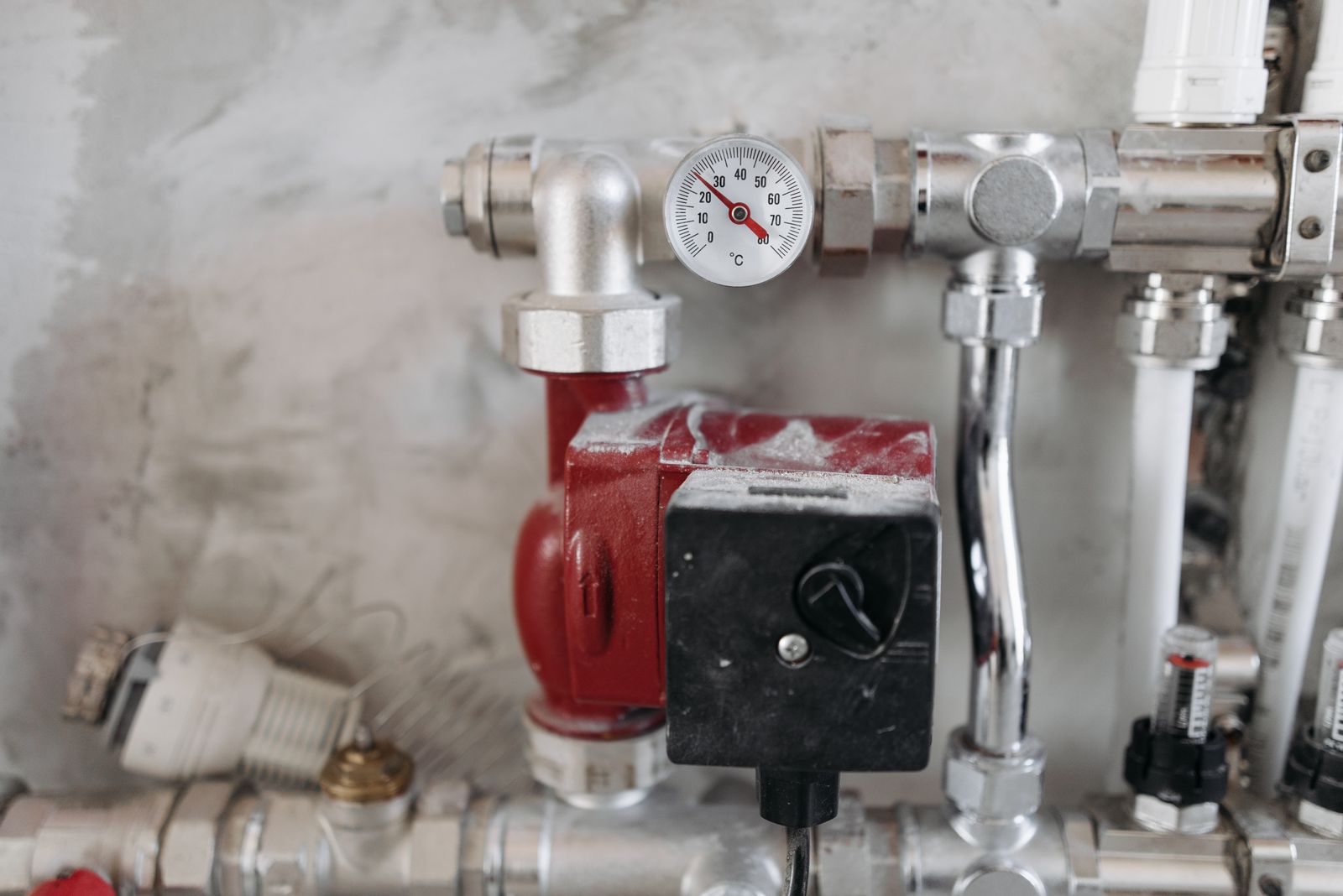
It’s the single most common call we get, and the one most often misdiagnosed. The pressure on your boiler keeps dropping, you keep topping it up, and a fortnight later you’re back at the filling loop. Here’s what’s actually going on — and how to tell a quick fix from a hidden leak.
A sealed central-heating system is supposed to hold a steady pressure, usually between 1 and 1.5 bar when cold. The water inside doesn’t get used up — it circulates round and round. So if the gauge is falling, that water is going somewhere it shouldn’t. The only questions are where, and how fast.
Why pressure drops in the first place
There are really only a handful of causes, and they fall into two camps: harmless, and not. Working out which you’ve got is the whole game.
- A recent top-up settling — air working its way out over a day or two. Normal, and it stops.
- A weeping radiator valve or bleed point — small, visible, and usually easy to fix.
- A failed expansion vessel or pressure-relief valve — often shows as water dripping from an outside overflow pipe.
- A hidden leak in the pipework — under floors, in screed, or buried in a wall, where you’ll never see a drop.
The first one sorts itself out. The middle two a good heating engineer will spot in minutes. It’s the last one that wastes people months and hundreds of pounds — because there’s nothing to see.
The two-week test
Top the system up to 1.2 bar and note the reading. If it’s visibly lower within a day or two with the heating barely used, you don’t have an air problem — you have a leak. That’s the point to stop topping up and start looking properly.
What “topping up” is really costing you
Every time you refill a leaking system you’re adding fresh, oxygenated water. That accelerates internal corrosion, builds sludge, and shortens the life of the boiler you’re trying to protect. A system that needs topping up weekly isn’t being maintained — it’s being slowly damaged.
If you’re reaching for the filling loop more than once a month, the leak has already decided for you.
Where hidden heating leaks hide
On modern homes, the usual suspect is the pipework buried in the floor screed — particularly around manifolds and underfloor-heating circuits. On older properties it’s joints under suspended timber floors, or runs chased into walls during a past refurbishment. None of these announce themselves. The first sign is often a warm patch on the floor, a faint smell of metal, or simply the gauge that won’t hold.
How we find it without lifting your floor
This is exactly the situation non-destructive detection is built for. We pressure-test the heating circuit in isolation, then use thermal imaging to read the warm trail of escaping water through the floor, and tracer gas to pinpoint the exact joint. The result is one small, confident opening at the confirmed spot — not a hallway lifted on a hunch.
When to just book the survey
If you’ve topped up twice in a month, if there’s any warm patch underfoot, or if a plumber has already “made good” once and the pressure still drops — stop guessing. A survey costs far less than a second wasted repair, and most heating-leak detection is claimable on buildings insurance.
A dropping gauge is your system telling you something early, while it’s still cheap to fix. The mistake isn’t the leak — it’s topping it up and hoping. Read it for what it is, and you’ll save yourself the floor.